My last post, penned in June (just over six months ago), was written with joy and trepidation after having been hired into the pool of potential VPs, ready to wait for my chance when a spot came open. I'll be honest that at the time, I anticipated a good six months - if not a year - before that chance came. Imagine my surprise, then, when a few short weeks later I got the call that the time had come! The movement of one administrator in the district had created a domino effect, and the result was a position - for ME - at Abby Middle! I quite literally danced with joy at the news (much to the amusement of my fellow shoppers, as I was in the Sooke grocery store parking lot at the time).
Why then, you ask, have I not taken the time to chronicle my adventures as a new vice principal since then? Good question!
I sometimes feel like I've barely had time to breathe, let alone pause to write my thoughts in a coherent manner. I started my role as an administrator slowly in August, puttering away in my new office for the first two weeks, and then diving into the job more fully with new staff interviews, planning for new student orientation, and trying to get a handle on all that my new job entailed. I thought briefly, then, of writing a blog post outlining my thoughts on the position thus far - but weekends were spent dreaming about work and popping in to school, and no writing was done.
Then September hit. I thought it would be great to write a blog outlining the first month as a new VP. Ha! September bled into October, and November, and then December. I have a post that I began sometime in October, and it gives a brief glimpse into my thoughts at the time:
"The past two weeks have been fairly incredible in terms of student behaviour. [My principal] and I felt like pinballs, ricocheting from one incident to the other. Objectively we recognize that not every student in the school was hitting, swearing, ignoring teacher requests, and destroying school property. But boy, oh, boy - for a few days there, it sure felt like the whole of the 700 student population had decided to emulate the Lord of the Flies."
Really, that incredible feeling of ricocheting continued through to the Christmas holiday. Only now, on the last day of the holiday, have I pulled out my laptop and turned my thoughts toward school (okay, that's not entirely true; but this is the first day that I pulled out my laptop, anyway). I guess that's the biggest change I've noticed with taking on the "administrator" title: I never stop thinking about school. It's always there, either niggling away gently in the corner of my mind while I'm with my family or watching a movie or working in the yard; or banging away - front and centre - when I'm trying to sleep. I recognize that some of that persistent thought will dissipate once I'm more used to the job and the learning curve evens out some. However, I suspect it is something that is part of the role that will never fully go away. Like those administrators before me, I will need to come to a place of peace with that sense of constant responsibility.
I'm looking forward to the challenge; and I'm looking forward, too, to being able to look back in a year's time to see my growth. So I'd better keep writing, so I have something to look at!
I am Kari Petzold, a new administrator sharing the reflections and passions of an educator embracing the world of district leadership. Welcome to my journey!
Sunday, January 6, 2019
Wednesday, June 20, 2018
The Next Step
For close to two years, this blog has been a means to record my thoughts and growth as I moved through the Master's of Educational Leadership program at CityU. This week was our graduation ceremony, and - since my thesis is finished - that stage of my learning journey is complete.
So, what's next? I feel that I'm in the perfect position. I love the job I'm in, which allows me to visit numerous schools, problem solve with a variety of staff, students, and parents, and have the opportunity to continually learn new things about supporting struggling students.
However, I'm also on the threshold of entering the world of school administration! This past week I was interviewed for the position of vice principal for middle school, and I just heard that I have been asked to join the "pool" of VPs waiting for the next opening. How exciting! I feel thrilled and nervous in equal measure; nervous not because I don't think I'm ready, but rather because I have so many dreams and such high expectations for myself, and I know that it will be extremely challenging to bring those to fruition.
Thus I sit at my desk, on a quiet morning in June, contemplating both the uncertainty and the exciting possibilities that await around the next bend. Whatever the path, I will continue this blog with a new purpose: to share my thoughts and growth as I move through the world of district level leadership, both in my current position as a helping teacher, and in the future as an administrator.
Welcome to my new journey!
Thursday, May 31, 2018
Reflecting and Learning and Growth, Oh My!
This blog was begun as a means to record my journey through this Master's of Educational Leadership. Originally intended only as a medium for my Portfolio, it evolved as I became more comfortable with sharing my thoughts among a wider audience.
Scrolling back to my initial posts, one can see how my understanding of blogging has changed. The format of my posts - initially there was no format! - has become easier to read and more focused. This was largely due to my husband, skilled at marketing, and much more aware of various social media formats. Technological growth can be seen in my dabbling with Twitter (I opened an account in January, 2017), and in my slow exploration of its possibilities. Other technological advances - personally speaking - included becoming comfortable sharing collaborative documents (both in Google and Office 365), functionally using OneNote, and learning to move (relatively) seamlessly between Google and Word formats.
While all of this technological learning has been beneficial in many ways, it is but the tip of the iceberg when I consider my learning and growth throughout the program. Each post of this blog has been a way to record my thoughts, opinions, and impressions as we moved through the various courses.
It was never a challenge to find something that resonated with me during each class, and I enjoyed using the blogging format to outline my thoughts and reflections on various topics. I'm thankful that I had the foresight to recognize that I would likely forget pertinent information as new classes were begun, and so kept this blog up to date. During each class I would make notes as to possible blog post ideas, and then would flesh out those ideas during the following week. My mind was generally jelly by the end of each Saturday's class, so this reflection afterward was an excellent way to both review the material and make connections to my worldview. Occasionally, as I became more confident in my posts, I would share the link for the blog on Twitter if I felt that the content would be interesting to a wider audience. Just the process of opening up my thoughts that way helped me to grow as a leader, and I plan to continue blogging once I become an administrator.
I'm thrilled to have this compilation of my thoughts as I progressed through this Master's program. Looking back reminds me how far I've come in my recognition of how I can work within my own strengths and "stretches" to be the kind of leader who inspires greatness in whichever school community I find myself. It is a tremendous challenge, but one that invigorates me and encourages me to always strive to be the best I can be. Onward!
| My CityU ID |
While all of this technological learning has been beneficial in many ways, it is but the tip of the iceberg when I consider my learning and growth throughout the program. Each post of this blog has been a way to record my thoughts, opinions, and impressions as we moved through the various courses.
It was never a challenge to find something that resonated with me during each class, and I enjoyed using the blogging format to outline my thoughts and reflections on various topics. I'm thankful that I had the foresight to recognize that I would likely forget pertinent information as new classes were begun, and so kept this blog up to date. During each class I would make notes as to possible blog post ideas, and then would flesh out those ideas during the following week. My mind was generally jelly by the end of each Saturday's class, so this reflection afterward was an excellent way to both review the material and make connections to my worldview. Occasionally, as I became more confident in my posts, I would share the link for the blog on Twitter if I felt that the content would be interesting to a wider audience. Just the process of opening up my thoughts that way helped me to grow as a leader, and I plan to continue blogging once I become an administrator.
I'm thrilled to have this compilation of my thoughts as I progressed through this Master's program. Looking back reminds me how far I've come in my recognition of how I can work within my own strengths and "stretches" to be the kind of leader who inspires greatness in whichever school community I find myself. It is a tremendous challenge, but one that invigorates me and encourages me to always strive to be the best I can be. Onward!
Wednesday, May 30, 2018
Internships
The expectations of the first two internships were not difficult for me. As a learning support teacher, I was able to easily meet the needs of the LSS internship. Similarly, I had spent many years growing into the role of informal leader within the school, and I was fairly comfortable with becoming more purposeful in this through the second, school-based internship. However, from the moment I learned of its existence, the internship focusing on district-wide leadership had me worried. I realize that sounds silly, as I'm endeavoring to become an administrator; but there is something about branching out to the district level that made this introvert quail inside.
Well, a solution to that dilemma was found! I applied for and accepted the position of District Helping Teacher for Learning Support Services in Abbotsford, and have spent this school year engaged in exactly the kind of district-level leadership that once made me nervous. In fact, a good part of the reason I applied for the position in the first place is because I recognized this fear in myself, and wanted to eliminate it: I don't like being afraid of new things. Over the past months I have had the opportunity to work with, learn from, and problem-solve with teachers, administrators, education assistants, counselors, youth care workers, students, and parents from a wide array of schools. I have attended care team meetings, led many safety plan meetings, provided programming advice for challenging students, attended meaningful training sessions, and led a variety of professional development workshops for district staff, all with the goal of increasing student success. I believe I can safely say I have conquered my fear of district-level leadership, and I have been delighted with the process. Throughout, I have kept focus on the leadership standards, and have seen my own growth in every area.
| A snapshot of my last proposal |
| A log of hours from the last internship |
Leadership Practices Inventory
Leadership Practices Inventory - Pre-Master's Summary

Leadership Practices Inventory - Post-Master's Summary

My observations:
Leadership Practices Inventory - Post-Master's Summary
My observations:
- growth in almost all areas
- my scores are often higher than those of the others who filled out the forms
- I believe this is because I know what I intend to do, and therefore rate my intentions higher than what comes out in my actions
- this is good to know going forward!
Saturday, May 5, 2018
Last Class
When I first began this journey two years ago, I remember chatting with a friend who had recently completed the program. During our conversation, I asked how it felt to be done. "Well, I sure love having my Saturdays back," she laughed. But after a pause she added, "but I also really miss those Saturdays." Staring at my own two years' worth of Saturdays, I was a bit skeptical. But now, having had our last class, I can completely understand what she meant.
Our cohort of ten was, I think, something special. From the first we have clicked, and I can not imagine having gone through this journey without them. Every course provided us a new opportunity to see each other in a different light, and we frequently laughed and cried together. Each of my nine cohort members opened my eyes to something they were passionate about: creative education, technology, careers programs, sports of all kinds, music, inclusive classrooms, and the true joy to be found in loving and connecting.
I am truly a better educator, a better leader, and a better person for having had the privilege of knowing these wonderful people. Already I know that when someone asks, I, too will say, "I miss those Saturdays!"
Saturday, April 21, 2018
Reflecting on Appreciative Inquiry
Discovery: Appreciating
the best of “what is”
Over the past two years
I find that I have discovered a passion in myself that I did not
previously know was there. I always knew that I loved teaching - sometimes more
than others! - but I’m not sure that prior to the last two years anyone would
have said I was “passionate” about it. However, I’m pretty sure anyone who has
had a conversation with me about teaching and learning recently will tell you
that I am passionate about my work. And indeed, I can feel the difference in
myself.
Dream: What might be?
When I think about the
crossroads at which I find myself now, I am reminded of a similar crossroads
when I first began this program. My reflection at the time reads:
The faith in the program
that I professed in this post (it was from my blog in October, 2016) has been borne out, as I now
feel that I have the means to accomplish just that. It was learning about
appreciative inquiry that truly changed everything for me - especially after I
had witnessed its effects first hand. Combined with this new understanding, I have also taken my firm
belief that behaviour is communication, and now apply that concept not only to
the children I work with, but also to the adults. If, as I believe, most of the
“refusal” behaviours we see in adults are as a result of insecurity or lack of
skill, then my job is to show empathy and work alongside to promote growth; not
to be frustrated and angry. And the relationships that are built as a result
break down barriers and open staff up to taking risks. It is very exciting!
As I look to the future
after the completion of this Master’s program, I realize that some of the steps
I took to expand my learning within the program are ones that I want to further
explore when I move on. A small step will be an increased use of my Twitter
account. While I check it regularly, I seldom post about what I see in my
school visits. I know that I have a voice that can help to spread the
understanding I have gleaned from master teachers and researchers regarding the
best ways to help our kids. Using Twitter as a forum to do this is one small
step. A medium sized step, in addition, will be to continue to write on my
blog. Begun only as a means for preserving my thoughts and then presenting them
for my portfolio, I see as I read over my posts from the last two years that
there is a great deal that could be useful to other teachers on their learning
journey. And as I move into the role of administration - my bold step - that
blog could be a meaningful way to share my growth and stretches in a new,
challenging role.
It occurs to me that posing such powerful questions in a
meaningful way with staff requires the leader to have a good grasp of the
possibilities of the “big idea” while relying on the team to fill in the gaps
and offer new areas for exploration. Even if this takes the team away from
where the leader had originally intended, the firm grasp of the big idea will
ensure that the growth is purposeful and targeted. To that end, questions must
be well-thought out with the overall needs of the community in mind. This is
something that I feel I can contribute to the schools I work in now already, in
the many meetings I attend and the casual conversations I have. Instead of
asking a team, “Did that strategy work for you?” I can instead inquire, “How
could we adjust the strategies we are using for this student? Why do you feel
this strategy worked while this one did not?” So many more possibilities are
contained in the latter questions; and so much hope for growing together. These
are the kinds of conversations that I can start now, and continue to have
throughout my career as an educational leader.
Design: What should be?
I know what I would like to see in schools, but changing that vision into
a reality takes skill and planning and teamwork. The building of relationships
comes quite naturally for me, as I have long valued their importance for the creation
of community. The same can be said with engaging the shared experience of the
team through conversational leadership; it seems so clear to me that the school
community can not be healthy without
it. However, one area that I truly see as a growth area for myself is in the
area of powerful questions. The art of being able to ask questions that get to
the heart of the matter and encourage people to think in a positive way for
hopeful solutions is not one I have yet mastered – or even one that I previously
would have said was important! For this reason the work of Vogt, Brown, and
Isaacs (2003) is so valuable for my personal journey. The conversations that
can be created through the posing of purposeful and deep questions can make the
difference between the realization of a shared vision or not. But where to
start? The authors provided numerous suggestions of where to start, some of
which resonate closely with me.
One of the first ideas that caught me was the
interview question consisting of just one question, wherein the questioner
asks: What’s the one question we should be asking about you? What a brilliant
way to start a discussion! And what a fantastic way to discover what someone
feels is truly important about themselves. This is something that I feel could
be adapted to fit growth-plan conversations as well.
The authors also point out that “(b)ecause of the nature of language,
almost all of the questions we pose have assumptions built into them, either
explicit or implicit” (p. 5). In light of that, a conversational leader must remember
to encourage personal reflection among the staff to determine our own underlying
assumptions and beliefs.
The right questions allow staff members to ponder, discuss, and elaborate
on their ideas. To begin with, the phrasing of the question is critical. As the
triangle graphic below shows, asking “Why is this workshop meaningful for you”
is far more powerful than asking “Did you like this workshop?” Of course, when
asking why questions, one must be very careful to phrase them in such a way
that they do not evoke a defensive response!
| Questions to stimulate powerful conversation |
Vogt, E. E., Brown, J.,
& Isaacs, D. (2003). The art of
powerful questions: Catalyzing insight,
innovation, and action. Mill Valley, CA: Whole
Systems Associates.
Saturday, April 7, 2018
Exhilaration
As we begin our last course of this Master's of Leadership program, it seems an appropriate time to reflect on where I was - personally and professionally - when I began the program, and where I am now. Looking back through my reflections from those early days, I came across an image I had chosen to show how I felt about myself as a leader. I saw myself on a journey, without a known destination in mind. The image shows the great climb that has already occurred, and the trajectory shows that the climb continues. For myself, this reminded me that my desire for lifelong learning means that the climb will never finish.
Almost two years later, after learning and growth and experiences that have stretched me, a new reflection of how I perceive myself as a leader led me to this image:
Reading back over my notes from our first class, I notice that while I saw myself as a leader in my small sphere, I wasn't yet sure of either my interest in expanding that sphere, or my abilities to do so. The skydiving image resonates with me because now I feel that, despite the risks of embracing leadership at a more formal level, the prospect is exhilarating! A key element to that, of course, is the fact that the best way to mitigate the risks is to have a team surrounding you; a team built on trust and collaboration and common purpose.
I find that the various courses we have taken over the past 18 months have given me such an array of tools that I now feel well prepared to take on the role of administration. Ideas that hadn't even occurred to me before starting this program have become key to how I view educational leadership: the importance of timely supervision of instruction for school staff; an understanding of the inner workings of a school budget - and the difficult choices administrators have to make to support their school community; the law guiding educational practice; and the ethical dilemmas to be addressed on a daily basis. Most importantly, however, I've learned how crucial it is for a leader to be present, to be available, and to have a clear understanding of the pulse of the school community. The building of relationships is at the core of a trusting and effective team, and I feel so strongly that over the past months I've developed the skills to build those relationships with staff, students, and parents.
And so, my exhilaration! What lies next remains uncertain, but I know that I anticipate it with eagerness and enthusiasm, because of who I have become through this program.
Saturday, March 10, 2018
Distributed Learning in Abbotsford
Our final class in the Technology for Educational Leaders course took place in the Abbotsford Virtual School (AVS) building. Called Philip Sheffield High School at its open in 1936, the school later became an elementary school and when declining enrollment forced its close in 2005, it was repurposed to house the distributed learning (DL) staff and classrooms that make up AVS.
There are (according to our instructor Brad, who is also the administrator of AVS) 70 distributed learning schools throughout BC. Distributed learning is not the same as distance education, as many of the courses involve the possibility of face-to-face interaction. In fact, the Kindergarten to grade five model is predominantly paper-based, with weekly on-site visits for classroom participation. It is in the grades 6-12 and adult education models where much of the learning is online, although students are still able to access teacher support and hands-on opportunities regularly. We got a good look at AVS' MakerSpace, including 3D printers, virtual reality gear, and the tools for making and learning about circuits. All of this is used by students with teacher guidance.

Distributed learning is not for everyone. Students need to be self-motivated and able to ask for help and interact with a teacher online, and many of those who come to AVS as a "last resort" end up returning to their catchment school. However, the concept of "any place, any pace, any time learning" is catching on, and the number of students engaging in blended learning - some classes in their regular high school, some classes through distributed learning - has grown to about 14% of the province's 550 000 students. And with distributed learning schools able to offer a wide variety of courses to smaller groups of students than is feasible in a brick and mortar high school, this number is likely to grow.
One of the passions of teachers working in the distributed learning world is that of digital literacy. The BC Ministry of Education defines digital literacy as "the interest, attitude and abilities of individuals to appropriately use digital technology and communication tools to access, manage, integrate, analyze and evaluate information, construct new knowledge, create and communicate with others." This sure sounds like using the tools of digital technology to learn through the new curriculum, and distributed learning teachers are at the front edge of making this happen. That's why digital literacy and citizenship is so integral to what they do. It is often the expectation of adults that children who have grown up with technology (digital natives) know how to use and respect it. However, teachers are starting to realize that this is not the case; students lack the fear of pressing buttons that plagues many adults, but are often no more savvy about what is really going on in the online world than those digital immigrants who are teaching them (those of us came to these tech tools later in life, as opposed to being born into them!). So, Brad and his team of AVS staff are purposeful about making sure that the students taking courses through the distributed learning platform understand the benefits, the risks, and the responsibilities of an online presence. As blended learning expands throughout the schools, one can hope that digital literacy will become a skill understood and demonstrated by students and staff alike.
There are (according to our instructor Brad, who is also the administrator of AVS) 70 distributed learning schools throughout BC. Distributed learning is not the same as distance education, as many of the courses involve the possibility of face-to-face interaction. In fact, the Kindergarten to grade five model is predominantly paper-based, with weekly on-site visits for classroom participation. It is in the grades 6-12 and adult education models where much of the learning is online, although students are still able to access teacher support and hands-on opportunities regularly. We got a good look at AVS' MakerSpace, including 3D printers, virtual reality gear, and the tools for making and learning about circuits. All of this is used by students with teacher guidance.
Distributed learning is not for everyone. Students need to be self-motivated and able to ask for help and interact with a teacher online, and many of those who come to AVS as a "last resort" end up returning to their catchment school. However, the concept of "any place, any pace, any time learning" is catching on, and the number of students engaging in blended learning - some classes in their regular high school, some classes through distributed learning - has grown to about 14% of the province's 550 000 students. And with distributed learning schools able to offer a wide variety of courses to smaller groups of students than is feasible in a brick and mortar high school, this number is likely to grow.
One of the passions of teachers working in the distributed learning world is that of digital literacy. The BC Ministry of Education defines digital literacy as "the interest, attitude and abilities of individuals to appropriately use digital technology and communication tools to access, manage, integrate, analyze and evaluate information, construct new knowledge, create and communicate with others." This sure sounds like using the tools of digital technology to learn through the new curriculum, and distributed learning teachers are at the front edge of making this happen. That's why digital literacy and citizenship is so integral to what they do. It is often the expectation of adults that children who have grown up with technology (digital natives) know how to use and respect it. However, teachers are starting to realize that this is not the case; students lack the fear of pressing buttons that plagues many adults, but are often no more savvy about what is really going on in the online world than those digital immigrants who are teaching them (those of us came to these tech tools later in life, as opposed to being born into them!). So, Brad and his team of AVS staff are purposeful about making sure that the students taking courses through the distributed learning platform understand the benefits, the risks, and the responsibilities of an online presence. As blended learning expands throughout the schools, one can hope that digital literacy will become a skill understood and demonstrated by students and staff alike.
Saturday, March 3, 2018
Teaching with Technology
With a focus on education for the 21st century, British Columbia’s Ministry of Education has as its goal to provide flexible learning environments focused on fundamental skills. Engaging students in their own learning is of paramount importance, and researchers and teachers alike have found that using technology is a wonderful way to promote this engagement. But where to start? Most teachers I encounter are unfamiliar with technology tools beyond their email and (perhaps) the ability to share documents with their students and colleagues through Google Classroom or Office 365. In our Technology for Educational Leaders class we have become aware of some great resources for finding out about technological tools that have the power to open up learning possibilities previously impossible in the regular classroom.
Some of these resources - those suggested by our instructor, Brad Hutchinson - outline the latest finds by tech nerds across the educational spectrum. Websites such as eschoolmedia.com, smartbrief.com, and thetechedvocate.org are a great place to start for those educators unfamiliar with the possibilities that are being explored out there. Some of the innovations are not yet realistic for a regular classroom setting, but the potential is outstanding. It won't take long before some variation of these tech tools can be found in every school.
Virtual Reality
Most people have heard of the existence of virtual reality, although I have found that very few people in the education world have had a chance to experience it. This is one of those innovations that has found its way into our home, as my tech family had been eyeing one for ages. We purchased the HTC Vive (the other common one is the Oculus Rift), and then set about setting up. Virtual reality requires a powerful computer - a cost most users don't consider at the outset. We were okay on that front, as I have a house full of gamers who already require increased computing power. We next had to set up a space to accommodate the Vive, so that we don't run into anything when the headset is on - with eyes and ears covered, you'll only be hearing and seeing what is coming through the headset and it's easy to trip over people, furniture...or cats. Considering the space and computing needs, full virtual reality systems aren't yet a functional tool for a classroom. Only one person at a time can use it, and I've noticed with our own that there is quite a bit of tech tweaking needed to ensure that all the parts are working - so someone capable of such tweaking would be needed at all times. However, we've also experimented (before the Vive entered our home) with more portable versions of virtual reality. Google Cardboard offers a fairly immersive VR experience using your own smartphone, Cardboard apps, and a viewer that is literally made out of cardboard. For those people or classrooms not willing to shell out the thousands of dollars for a full VR set and computer combo, Google Cardboard offers a simpler way to enjoy the virtual reality experience.
3D Printers
Another piece of interesting technology making its way into schools - albeit slowly - is the 3D printer. This is something else that made its way rather more quickly into our home, and has been in constant use for the last year or so. A nozzle lets out a fine strand of plastic thread, called filament, which slowly builds - layer by layer - into the desired object. You can design your own creations (if you have the skill), or choose from the many designs other creative types have already uploaded to places like Thingiverse (a very cool place to check out some 3D printer ideas). This, too, is another technology that has tremendous possibilities for the classroom - if you think it, you can build it! - but there is a great deal of computer knowledge required before it can be of use. The only reason anything actually gets printed in our house is because my husband is very talented at creating 3D images and troubleshooting when things don't go exactly as planned (such as when your creation ends up as a bird's nest ball of filament at the bottom of the printer). However, we've recently discovered that the Google account my son has for school supports a program called SketchUp, which allows users to create in 3D. This definitely has possibilities, if staff become comfortable enough with the technology to support students as they learn and create in this medium.
Robotics
Many classrooms are exploring the use of coding through robotics. Products such as Lego's Mindstorms and Sphero give kids (and adults!) the opportunity to learn the basics of coding in a fun way. My own niece asked for (and received...we couldn't resist) a BB8 Sphero for Christmas. We all had fun using the "Force" to make it move, and since then she has used the app on her iPhone to program it to do all sorts of movements. These devices are pretty user friendly for the minimally talented when it comes to technology, as the app is fairly straightforward. However, the more knowledgeable the teacher is regarding its possibilities, the more the students will get out of it. In our district, we have a talented group of digital helping teachers who would gladly help a teacher get started!
Looking through the possibilities for integrating technology in the classroom can be overwhelming for those teachers who are used to using old-school methods and fear the inevitable learning curve. This is completely understandable! For myself, I have struggled through this learning curve and now find that I am surprisingly well informed about new technology; not because I am a technology enthusiast myself, but because my husband - and increasingly my son - are very much such tech nerds! We have quite the array of innovative technology in our house, simply because the two of them are fascinated by finding new ways to express their creativity. My husband deconstructed his first computer when he was eight years old, and still remembers the thrill of watching his dad's Dot Matrix printer in action. Is it any wonder we have a 3D printer in our home? Through my association with those who truly embrace new technology, I have developed a new appreciation for its possibilities for education, and have begun to overcome that most common source of paralysis for technology immigrants such as myself: what happens if I break it?? Having lots of exposure to the ins and outs of various programs has increased my confidence and willingness to explore. This is the missing link for many of our teachers, and one that can only be overcome by improved professional development, resources in schools, and TIME.
Some of these resources - those suggested by our instructor, Brad Hutchinson - outline the latest finds by tech nerds across the educational spectrum. Websites such as eschoolmedia.com, smartbrief.com, and thetechedvocate.org are a great place to start for those educators unfamiliar with the possibilities that are being explored out there. Some of the innovations are not yet realistic for a regular classroom setting, but the potential is outstanding. It won't take long before some variation of these tech tools can be found in every school.
Virtual Reality
| Google Cardboard |
3D Printers
| 3D printer in action |
Robotics
| The Sphero SPRK+ |
Looking through the possibilities for integrating technology in the classroom can be overwhelming for those teachers who are used to using old-school methods and fear the inevitable learning curve. This is completely understandable! For myself, I have struggled through this learning curve and now find that I am surprisingly well informed about new technology; not because I am a technology enthusiast myself, but because my husband - and increasingly my son - are very much such tech nerds! We have quite the array of innovative technology in our house, simply because the two of them are fascinated by finding new ways to express their creativity. My husband deconstructed his first computer when he was eight years old, and still remembers the thrill of watching his dad's Dot Matrix printer in action. Is it any wonder we have a 3D printer in our home? Through my association with those who truly embrace new technology, I have developed a new appreciation for its possibilities for education, and have begun to overcome that most common source of paralysis for technology immigrants such as myself: what happens if I break it?? Having lots of exposure to the ins and outs of various programs has increased my confidence and willingness to explore. This is the missing link for many of our teachers, and one that can only be overcome by improved professional development, resources in schools, and TIME.
Saturday, February 17, 2018
Seeking an IT Plan
In our Master's of Leadership cohort are represented four local school districts: Abbotsford, Langley, Surrey, and Coquitlam. It is always interesting when we are given assignments that compare the philosophies and operational practices of each district. While similar in many ways, they are also very different. Just as within a school, the leadership of a district truly affects the growth and health of the staff members - and by extension the students - throughout its entirety.
This past week we were given the assignment, in our Technology for Educational Leaders class, to ferret out our district's technology plan and critique it. Now, I use the word "ferret" quite purposefully, because for all of us, it took a great deal of detective work to find something that should be widely known. Nowhere on the Abbotsford School District website can you find a tech plan. The only indication that something like it should exist is in the Strategic Plan, which - under the heading of Engaging Opportunities - states that one objective is to improve the ethical and innovative use of technology. However, no details for how this is to be achieved are given. One could also infer, given today's learning environments, that the effective use of technology would be embedded in the goal of excellence in teaching, within the Progressive Workforce.

Where is the transparency? We have spent a lot of time learning over the past two years about the importance of professional growth plans, both for ourselves as leaders and for the staff in our buildings. These are meant to be fluid documents, often alluded to, guiding our decisions and practices to ensure we stay focused. I like to think that the same mentality has underscored the building of Abbotsford's Strategic Plan, but while those directly involved in its creation may find it easy to access, the rest of the stakeholders - staff, parents, students - are left largely in the dark.
Thankfully, I know who to ask, so was able to access the Information Technology Centre's document outlining district procedures regarding hardware and software purchases, set-up, and use. In 2016, members of the IT department worked with an outside consultant to determine next steps for the district, including recommendations and projected benefits (such as cost savings, equality of access throughout the district, simplicity of servicing, etc.). I know, from my own observations in schools that many of these recommendations have been adopted and are being enacted. I just didn't expect it to be so difficult to find a public document outlining the plan, its goals, and our progress as a district.
Transparency and accountability are key elements to building trust and community buy-in. Considering the similar difficulty my cohort members from other districts had in tracking down this information, it seems that those elements of transparency and accountability can be a widespread challenge. The learning journey doesn't stop once a person reaches upper management, and as long as every person remains open to feedback from the community, growth and development - at a district, school, and personal level - will always continue.
This past week we were given the assignment, in our Technology for Educational Leaders class, to ferret out our district's technology plan and critique it. Now, I use the word "ferret" quite purposefully, because for all of us, it took a great deal of detective work to find something that should be widely known. Nowhere on the Abbotsford School District website can you find a tech plan. The only indication that something like it should exist is in the Strategic Plan, which - under the heading of Engaging Opportunities - states that one objective is to improve the ethical and innovative use of technology. However, no details for how this is to be achieved are given. One could also infer, given today's learning environments, that the effective use of technology would be embedded in the goal of excellence in teaching, within the Progressive Workforce.
Where is the transparency? We have spent a lot of time learning over the past two years about the importance of professional growth plans, both for ourselves as leaders and for the staff in our buildings. These are meant to be fluid documents, often alluded to, guiding our decisions and practices to ensure we stay focused. I like to think that the same mentality has underscored the building of Abbotsford's Strategic Plan, but while those directly involved in its creation may find it easy to access, the rest of the stakeholders - staff, parents, students - are left largely in the dark.
Thankfully, I know who to ask, so was able to access the Information Technology Centre's document outlining district procedures regarding hardware and software purchases, set-up, and use. In 2016, members of the IT department worked with an outside consultant to determine next steps for the district, including recommendations and projected benefits (such as cost savings, equality of access throughout the district, simplicity of servicing, etc.). I know, from my own observations in schools that many of these recommendations have been adopted and are being enacted. I just didn't expect it to be so difficult to find a public document outlining the plan, its goals, and our progress as a district.
Transparency and accountability are key elements to building trust and community buy-in. Considering the similar difficulty my cohort members from other districts had in tracking down this information, it seems that those elements of transparency and accountability can be a widespread challenge. The learning journey doesn't stop once a person reaches upper management, and as long as every person remains open to feedback from the community, growth and development - at a district, school, and personal level - will always continue.
Saturday, February 3, 2018
Reflecting Teams: Healing Around the Kitchen Table
This course has opened our eyes to a variety of theories used in the field of family counseling. While we are not in a counseling program, it's understood that educational leaders are often called upon to mediate conflict within their buildings, whether between staff, students, parents, other admin, or some combination of them all.
What struck me as we examined recent counseling theories was that they all have a systems thinking philosophy at their core. The Bowen Theory, Open Dialogue, and Collaborative Theory are all approaches to conflict resolution that embrace the realization that all parts of a system are connected. Conflict in one area is affected by and will affect the other parts of one's life. Mediators - whether they be trained counselors or educational leaders - need to be aware of this and look for ways to promote healing across environments.
Founded on the idea that "it takes a village to raise a child," this style of family therapy has those at the centre of the conflict surrounded by friends and supporters. This can be informally around the kitchen table, or more formally in a counseling centre. The facilitator (a more gentle and less intrusive title than counselor), first asks those involved in the conflict to say their piece. The supporters, or Reflecting Team, remain silent and listening. Once those in conflict have stated their concerns, the facilitator asks the Reflecting Team to speak to each other about what they have heard. They are not interacting directly with those at the centre of the conflict, but are instead rephrasing and commenting upon what they heard. As they are friends and family, they will have the ability to shed light on the conflict and offer new perspectives, all while those in conflict listen silently. The facilitator asks pertinent questions, and when the time is right, the spotlight shifts again to those in conflict. Back and forth this process goes, while those present are engaged in listening carefully to the various perspectives, working toward a resolution.
As a way to present this form of conflict resolution to our classmates, my group created a kitchen table setting for our peers, complete with soup, biscuits, and tea. While we provided the conflict scenario, our classmates played the role of the Reflecting Team. Sipping on tea and spooning up soup, each member of the class listened to our conflict and, when prompted by the group's facilitator, offered up their thoughts and reflections. Even though our "conflict" was fabricated (albeit based on some recent parent-child conflict I may have experienced!), the feedback from the Reflecting Team was incredibly valuable. It is that feeling of truly being heard that makes this form of conflict resolution so powerful.
Saturday, January 20, 2018
Education Through a Family Systems Lens
We know when we are working with students that the influence we can have in the school is a small part of the larger picture of that child's world. This concept of the elements affecting a child's development have been explored extensively by many theorists, but one of my favourite models is the one put forth by Urie Bronfenbrenner, called the Ecological Systems Theory.
If you Google Bronfenbrenner (especially if you look at images), you'll see variations on the circular model showing nested influences on a child's development.
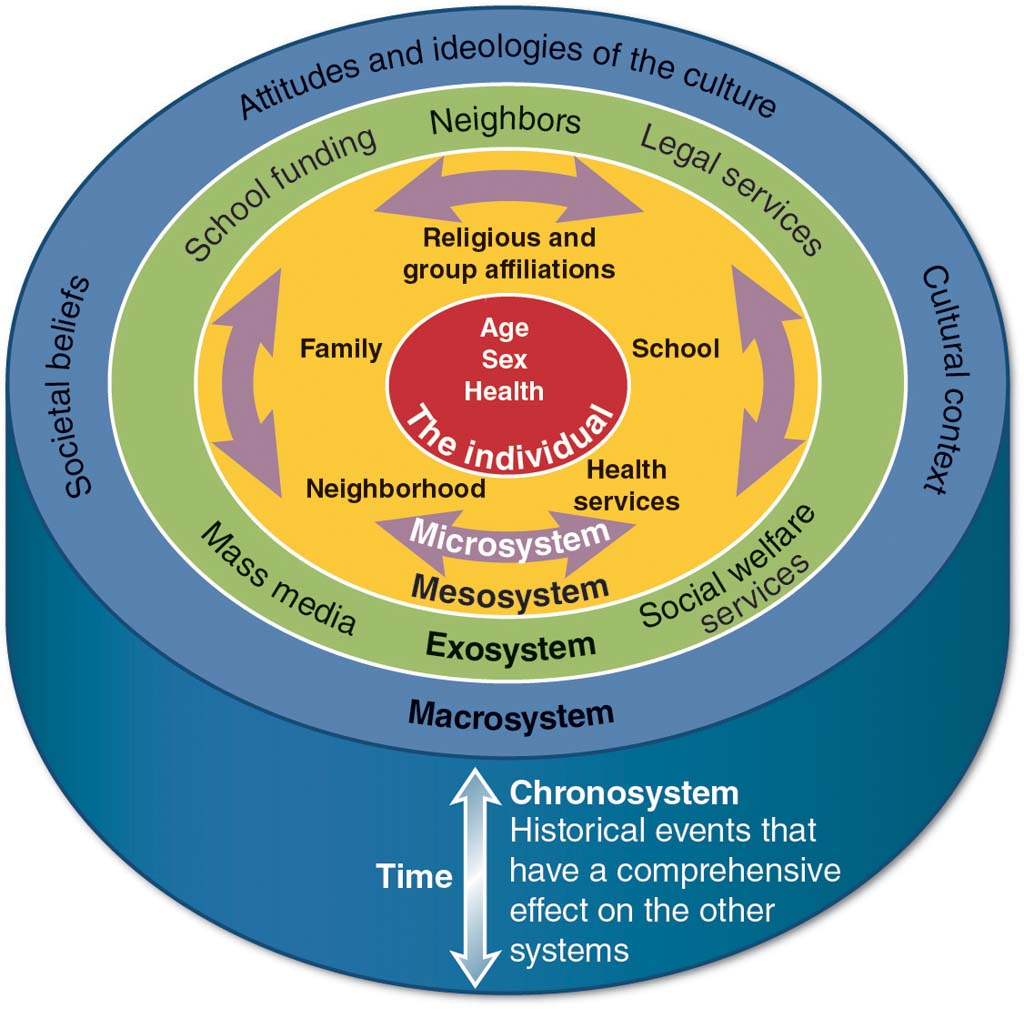
At the centre of the model is the child himself, and it is crucial to remember that a child's own genetics play a part in how he will interact with the rest of the layers. All of us have a particular temperament and resultant behaviours that affect how people react to us. A child who is easy-going and compliant will elicit a much different style of parenting - and teachering! - than will a defiant or irritable child. But we know from research (and our own experience) that if we respond to those negative traits with frustration, anger, or an unpredictable combination depending on our current level of patience, those negative behaviours tend to increase - both at home and in the classroom.
If you Google Bronfenbrenner (especially if you look at images), you'll see variations on the circular model showing nested influences on a child's development.
| Bronfenbrenner's Ecological Systems Model |
This interaction with parents and teachers - along with siblings, friends, schoolmates - forms the layer closest to the child in Bronfenbrenner's model, which is called the microsystem. This is the most influential level, as this is where meaningful attachments occur which will affect the child throughout life. Kids with secure attachments - based on warmth and love coupled with fair discipline - are at far less risk for future academic and emotional struggles than are those children who have never had the opportunity to develop those secure relationships with those nearest to them.
I find as a teacher that it is critical for us to be aware of this layer in our daily interactions with kids. We can't change what may or may not be happening in the home, but we have a tremendous ability to be a positive influence for kids in that microsystem layer. Just as there is a lot of research highlighting the importance of secure attachments between parent and child, so too is there a great deal of new research outlining the tremendous benefits to be found in close teacher-child relationships for building resiliency. That's pretty powerful, when we think of the number of kids we interact with everyday!
A child is a part of several microsystems, such as the home, school, swim club, church group, etc. Bronfenbrenner recognizes that these areas do not exist in a vacuum, and therefore the mesosystem is the layer which explores the interaction of these influences. It is here that we might see the impact on a child's academic success at school from having his parent volunteer in his classroom; the way the social skills a child learns at home impact his relationship with his peers; or the way participation in community sports gives a child newfound confidence on the playground. If we are purposeful as educators, we can work together with families to build opportunities for important life skills to be practiced in multiple environments, making it much more likely that our kids will be able to apply them independently.
Moving outward in Bronfenbrenner's model, we see some areas of influence on a child's life that are indirect. The exosystem explores those environments that affect the parents, and by extension the child. Parents who have jobs they like, where they feel autonomy and a sense of purpose, are much more likely to be happy and effective as parents (there is research to back this up!). At times of economic recession, such as the one in 2008, there is evidence that parents who have lost their jobs and feel stressed as a result, are more likely to fall into the kind of emotional instability which impacts their ability to be effective parents. Even things like the kinds of friends a child's parents have - and how they spend their time - will have an effect on child development. As educators, we can be a part of this level as well, by recommending helpful community social services to support a family. These don't have a direct impact on the child - he or she is not the one taking language classes, accessing mental health support, or visiting a doctor for chronic pain - but parents who are able to meet their own needs, are far more likely to be able to meet the needs of their kids.
The macrosystem is one that involves the cultural norms and beliefs that affect the family. An example of this in our Western society would be our propensity toward an individualistic worldview, in which we tend to be focused on our own well-being, with relatively little regard for the larger group around us. We are willing to go out of our way to protect those nearest and dearest to us, but generally consider that people outside that sphere can take care of themselves (again...lots of research to back this up!). In contrast, many other societies have a collectivist culture, in which the family is more naturally supported by the community and the children are cared for by the group as needed. In a society like that, the failure of the group to support a family in need reflects badly on the whole community, so everyone has a strong motivation to keep the whole group healthy. In schools, we can't influence the larger societal norms to any great extent, but we can create a culture that embraces the collectivist ideals. We are a "school family" where every member looks after each other, no matter who they are.
Finally, an element that underpins the ecological model is the chronosystem. This is not a layer, per se, but a consciousness that changes will occur over time both within the child (physical, emotional, and mental development), and within the environment (with family structural changes, residences, historical events, changes in parents' employment, etc.). Each of these changes, large or small, affect the development of the child at some level, and must be considered by those working with the child and his family.
The Bronfenbrenner model resonates with me, as does any theory that recognizes that every area of a child's life affects - and is affected by - the others. We have a critical role as educators, but we severely minimize our potential impact if we don't work alongside parents and the community to enable the whole family system to be in the best shape possible. I strongly feel that this is an area for educational leaders to create change, by focusing on the social, emotional, physical, and academic health of all members of the school community!
Saturday, January 6, 2018
A Commonplace Book
In two previous courses of this Master's program, we have had the opportunity to look at leadership through a counseling lens (look for my blog posts from July). Our current course on Family Systems and Conflict Management is building on that prior knowledge by acknowledging that as an educational leader we are faced with the whole child, which often means addressing the needs of the family as well. Our instructor, Chris Kinman, believes strongly in the fluidity of thought, reflection, emotions, and the interconnectedness of people with each other and nature. As such, one of our assignments is to note down our musings as we move through the class. The method of doing so is to use a Commonplace Book. If you're like me, this is a brand new term - though not a brand new concept.
A Commonplace Book is apparently a well known device of writers, scientists, readers, students...pretty much anyone who wants to keep a rather "stream of consciousness" record of what moved them, what jumped out at them, made them wonder or question or think. Examples of Commonplace Books can easily be found for the searching. What is more tricky, I think, is finding the format that works for you.
Not being one who leans toward the artistic, a paper copy of a Commonplace Book for me would consist largely of quotes and lists...I really like lists! And I'm not creative enough to connect my thoughts through a web in an aesthetically meaningful way. However, as mentioned in my previous post, I've recently discovered the beauty of organization through OneNote, and voila! The medium for my Commonplace Book was found.
Now, it doesn't look like too much right now, but of course I'll be adding to it as we move along. I think of this as my digital thought web, as I'm easily able to add new branches onto any main theme. I can also add pictures, which for someone like me (for whom stick figures are a challenge) means that I can make it pretty without frustration.
Overall I'm excited to see how it grows, and I like the idea that as new areas of interest emerge I can easily blend them into my previous observations. Bring on the reflecting!
Saturday, December 9, 2017
OneNote for a Quick Reference
One of the greatest learning curves I've had throughout this Master's has been in the area of technology. While I've known for years about the exciting things that can be done in the world of the Cloud - sharing working documents among colleagues and editing from any device, anywhere - I haven't actually been confident with doing those things until now. It's so empowering! For a long time I would always resort to asking my nerdy husband (and more recently, similarly nerdy son) how to do things. Now, I feel confident that if I don't know how to do it already, I can find out! Typing in a Google search for exactly what I want to find out - and finding the answers! - has opened my horizons.
It was just such a Google search that led me to use OneNote for a recent assignment. Our culminating task in this Human Resources class was to create a usable Administrator's Quick Reference Guide to help us have important information at our fingertips. There are an incredible number of Acts that dictate what the various levels of the school district can do in any given situation, and sometimes we need to be able to nail down our rights and responsibilities quickly. Hence, my Administrator's Handbook on OneNote!
Our school district has recently moved to using Office 365, and I have slowly (reluctantly at first...I've been a Google girl for some time) been learning the ways of Microsoft. When we first were given this assignment, I assumed I would simply do a Word document, including links to the various Acts along with whatever relevant information I could find. A friend in my Master's class suggested the use of OneNote, and my world shifted. A quick Google search: "how to use onenote" - and organizational vistas opened before me. It is easy to add tabs, and even easier to see at a glance where to find information. No more scrolling through pages to find my section on the School Act. And the coolest part? With the OneNote app on my phone, I can easily access the same information anywhere - even if I'm on the playground at school and need to quickly check what the School Act says about parents' rights. So handy!
It's been exciting to learn how to use another resource. Success really does breed success in learning, and now I'm exploring all the other apps Office 365 has to offer. Forms and flowcharts? Yes, please!
Saturday, December 2, 2017
The Right Seat on the Bus
Over the years I have learned a great deal about Human Resources from my mom, who (although retired now) had her Chartered Professional of Human Resources certification and worked in the field of HR in a variety of settings. I certainly heard the good and the bad, and as an employee myself, it was always interesting to hear her perspective as management. More recently, I've heard much about HR from my husband, who is part of the senior management team at his company. They have spent the last few years engaging in corporate coaching, working to build a strong culture filled with enthusiastic and skilled staff. Being interested, I've followed along with their process, reading the books he brought home, and debating with him the differences between the choices management can make in a union versus a non-union environment.
Good to Great by Jim Collins has become a must-read for companies large and small striving to rise above mediocrity. I enjoyed reading it with my "administrator" lens, looking to see which elements are applicable to a school district setting. Collins talks about the crucial importance of getting the right people in the right seat on the bus - and maybe your "bus" isn't the right one for them at all, in which case a leader must be rigorous in getting them off the bus. Well, in the school setting we are significantly more limited in our ability to determine who stays on or gets off the bus - due to the union presence - but as a leader I can work very hard to ensure that the people on my bus - the teachers, EAs, Youth Care Workers, Counselors, clerical staff, etc. - are all working together to develop the skills and values to do our best work for kids. According to Collins, the way to do this is to be a Level 5 Leader, who demonstrates the paradoxical traits of personal humility and professional will. When I think of the great leaders I've worked with, I know what he means: administrators who embrace the "servant leader" mentality and will always think of what's best for students first, and who will stick to doing what they know is right, even in the face of harsh opposition. These are the kinds of leaders that Collins tells us help make an organization great, as they face the hard truths, make wise decisions based on facts, and lead with passion.
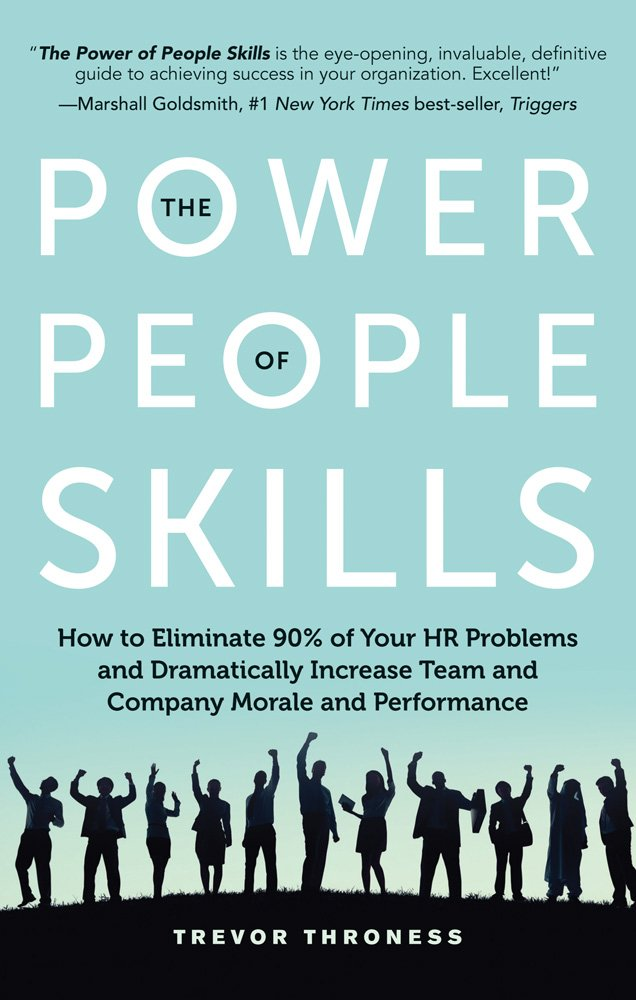
A second must-read that I've come across is a new book by local author Trevor Throness: The Power of People Skills: How to Eliminate 90% of Your HR Problems and Dramatically Increase Team and Company Morale and Performance. The book highlights the fact that anyone leading a company (or a school!) is in the people business above all else. Building on Collins' Good to Great research, Throness states that a leader of an organization has three top priorities:
- Find the best possible players for your team.
- Tell them clearly what they need to do in order to win in their role.
- Let them know how they're doing and coach them on a regular basis.
While we in the education business often say that we aren't able to have a say in who gets placed in our buildings, these three priorities sound a great deal like the imperative for a school principal to demonstrate effective supervision of instruction and guide the development of staff professional growth plans! Throughout the book, Throness talks about creating a culture of "star" players. How does one determine who is a star player? By using the Star Chart, of course. By plotting each employee's attitudes and effectiveness - including those of the admin team - an administrator can determine who is on the right "seat" and who may need some guidance. Determining strengths and areas of weakness in this manner provides an excellent starting place for professional growth plans. If we approach all students with a growth mindset - he can't do it yet - then we should certainly do the same for all staff members. Remember Throness' key priorities: tell them clearly what they need to do, and then provide the coaching to help them get there!
There are many more excellent concepts to be gleaned from these great books. Both authors stress the notion that any organization can only be great if its people strive for greatness. I believe that we all will work to do the best we can, if we know what we are working toward and coached in how to get there. In a school, the leader with "personal humility and a professional will" can inspire such greatness, and everyone in the community will benefit.
Saturday, November 25, 2017
Teacher Proficiencies
Just as we know that students need to be aware of exactly what is expected and then given the coaching to reach their goals, so too do employees need to know clearly what is expected in the workplace. Many teachers feel that their work is more of a calling than simply a job (and I agree), but the reality remains that there are standards we must meet in order to ensure that we are giving students the best possible chances of success as they move through our school system.
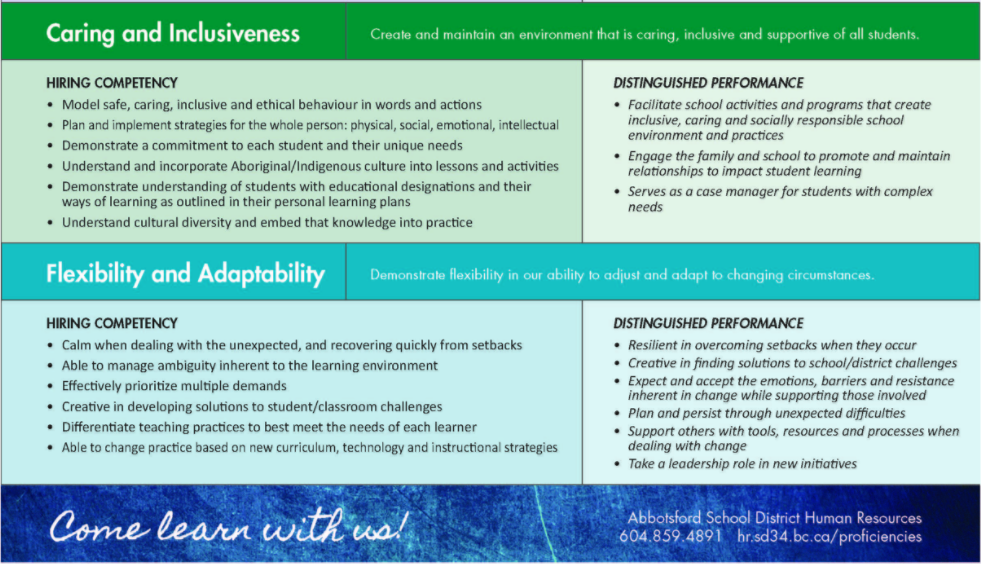
Abbotsford has created a set of Teacher Proficiencies which clearly show the essential skills that teachers must demonstrate. It's like having Learning Targets for eight areas of growth, and each level outlines the basic proficiency skills as well as those demonstrating "distinguished performance." While as adults we tend to chaff at the idea of being evaluated - it makes us feel anxious and insecure in a way we'd rather avoid - these proficiencies can give us a method of self-assessment very similar to the one we are working to instill in our students! In fact, we can change the wording of these proficiencies into "I can" statements, and we have our very own set of competencies. It is my hope that just as teachers are becoming more comfortable all the time with a curriculum that focuses on assessment of the big ideas for the whole student, so too will we all become comfortable with assessing our own performance based on the proficiencies that focus on the best we can be as educators.
Saturday, November 18, 2017
Ethical Decision-Making in Practice
In my blog post on October 28th I outlined the paradigms Rushmore Kidder suggests that we use to view ethical dilemmas. But what we also need is a consistent training regimen that we follow when making decisions, to help us get into shape - ethically speaking!
One of the ways that we can do this is through having a regular decision-making process to help us make sure we've made every effort to think of all angles. The Institute of Global Ethics has created the Nine Checkpoints for Ethical Decision Making which provides steps for anyone to use when confronting ethical issues, large or small. Practicing this on a daily basis with the smaller issues would be a fabulous way to build up the "muscle memory" so that when the big issues hit, we are prepared to handle them with ethical strength.
Step 1: Awareness
- Recognize there is a moral issue
Step 2: Actor(s)
- Whose dilemma is this?
Step 3: What happened?
- Gather all the facts for the situation.
Step 4: Is it Right versus Wrong?
- Apply the five tests
- is it legal?
- does it meet professional standards?
- does it feel right in my gut?
- would it be okay to see on the front page of the newspaper?
- would my role model do it?
- If you answer yes to most of the above, it is a right versus right dilemma - go to step 5
Step 5: Is it Right versus Right?
- What are the two rights?
- It is right to (send a student out of class for being rude) because (that is the stated classroom rule); but it is also right to (show mercy and work hard to build rapport) because (the student has a difficult home life and needs a safe space).
- which kind of dilemma is it?
- truth versus loyalty
- justice versus mercy
- short term versus long term
- self versus community
Step 6: Resolution
- Apply the three decision principles:
- ends-based principle - which decision will result in the greatest good for the greatest number?
- rule-based principle - what is the highest principle that could become the rule here? Would you want this principle applied in every situation, everywhere?
- care-based principle - if you put yourself in the position of others, what would you do?
Step 7: Ask - Is there a third way out?
Step 8: Decision - Decide what to do
Step 9: Reflection - Revisit the decision later; was it the best decision?
Learn from this for the next time!
From the Institute for Global Ethics, Preparing for the Challenges of the 21st Century.
Saturday, November 4, 2017
Examining Ethics through a 4Fold
Along with our class discussions and debates about ethics scenarios, we have also been exposed to a fabulous format for reviewing articles, books, and research. It's called the 4Fold, and our instructor was astonished that we hadn't had the opportunity to use it before now. Below I've included two article reviews. I can tell that I will be using this format in the future as a way to keep track of my thoughts as I peruse various media.
Uncovering Our Universal Values - Rushmore Kidder4Fold by: Kari Petzold | |
Problems posed in the article:
Purpose of the Article:
|
Beliefs held by the author:
|
Main Ideas | Examples/personal reflections |
|
|
|
|
|
|
|
|
|
|
|
Eomer: How shall a man judge what to do in such times?
Aragorn: As he has ever judged...Good and ill have not changed since yesteryear; nor are they one thing among Elves and Dwarves and another among Men. It is a man’s part to discern them, as much in the Golden Wood as in his own house.
|
Summary
The world is changing quickly, and the incredible advancements in the areas of technological communication and travel mean that our world has shrunk. We now have the opportunity to build a vast global community, if we can but put aside our few differences and instead focus on the many key values we share. Around the world there is a fear that our ethical barometer is falling, but there is still hope that together we can find that common core of values and build upon that foundation, all the while honoring our global diversity.
| |
There’s Only Ethics - Rushmore Kidder4Fold by: Kari Petzold | |
Problems posed in the article:
Purpose of the Article:
|
Beliefs held by the author:
|
Main Ideas | Examples/personal reflections |
|
|
|
|
3. Society is not in a good position to promote the necessary change in ethics
|
|
4. The challenge is that society has embraced ethical relativism
|
|
5. Values neutral education over the last 30 years has taken the stance that it is not correct for educators to teach fundamental moral principles
|
|
6. As a society we need a core set of values that can and must be taught
|
|
Summary
| |
Subscribe to:
Posts (Atom)