Over the years I have learned a great deal about Human Resources from my mom, who (although retired now) had her Chartered Professional of Human Resources certification and worked in the field of HR in a variety of settings. I certainly heard the good and the bad, and as an employee myself, it was always interesting to hear her perspective as management. More recently, I've heard much about HR from my husband, who is part of the senior management team at his company. They have spent the last few years engaging in corporate coaching, working to build a strong culture filled with enthusiastic and skilled staff. Being interested, I've followed along with their process, reading the books he brought home, and debating with him the differences between the choices management can make in a union versus a non-union environment.
 Good to Great
 by Jim Collins has become a must-read for companies large and small striving to rise above mediocrity. I enjoyed reading it with my "administrator" lens, looking to see which elements are applicable to a school district setting. Collins talks about the crucial importance of getting the right people in the right seat on the bus - and maybe your "bus" isn't the right one for them at all, in which case a leader must be rigorous in getting them off the bus. Well, in the school setting we are significantly more limited in our ability to determine who stays on or gets off the bus - due to the union presence - but as a leader I can work very hard to ensure that the people on my bus - the teachers, EAs, Youth Care Workers, Counselors, clerical staff, etc. - are all working together to develop the skills and values to do our best work for kids. According to Collins, the way to do this is to be a Level 5 Leader, who demonstrates the paradoxical traits of personal humility and professional will. When I think of the great leaders I've worked with, I know what he means: administrators who embrace the "servant leader" mentality and will always think of what's best for students first, and who will stick to doing what they know is right, even in the face of harsh opposition. These are the kinds of leaders that Collins tells us help make an organization great, as they face the hard truths, make wise decisions based on facts, and lead with passion.
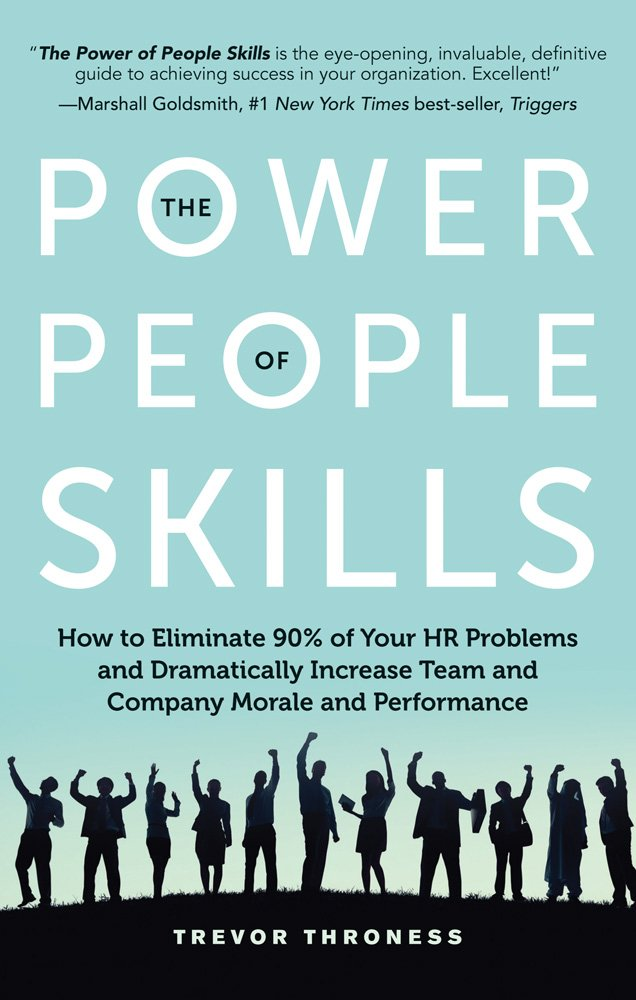
A second must-read that I've come across is a new book by local author Trevor Throness:
The Power of People Skills: How to Eliminate 90% of Your HR Problems and Dramatically Increase Team and Company Morale and Performance. The book highlights the fact that anyone leading a company (or a school!) is in the people business above all else. Building on Collins' Good to Great research, Throness states that a leader of an organization has three top priorities:
- Find the best possible players for your team.
- Tell them clearly what they need to do in order to win in their role.
- Let them know how they're doing and coach them on a regular basis.

While we in the education business often say that we aren't able to have a say in who gets placed in our buildings, these three priorities sound a great deal like the imperative for a school principal to demonstrate effective supervision of instruction and guide the development of staff professional growth plans! Throughout the book, Throness talks about creating a culture of "star" players. How does one determine who is a star player? By using the Star Chart, of course. By plotting each employee's attitudes and effectiveness - including those of the admin team - an administrator can determine who is on the right "seat" and who may need some guidance. Determining strengths and areas of weakness in this manner provides an excellent starting place for professional growth plans. If we approach all students with a growth mindset - he can't do it yet - then we should certainly do the same for all staff members. Remember Throness' key priorities: tell them clearly what they need to do, and then provide the coaching to help them get there!
There are many more excellent concepts to be gleaned from these great books. Both authors stress the notion that any organization can only be great if its people strive for greatness. I believe that we all will work to do the best we can, if we know what we are working toward and coached in how to get there. In a school, the leader with "personal humility and a professional will" can inspire such greatness, and everyone in the community will benefit.
 A Commonplace Book is apparently a well known device of writers, scientists, readers, students...pretty much anyone who wants to keep a rather "stream of consciousness" record of what moved them, what jumped out at them, made them wonder or question or think. Examples of Commonplace Books can easily be found for the searching. What is more tricky, I think, is finding the format that works for you.

