Showing posts with label Leadership and Counselling Diverse Cultures in Education (ECC 515). Show all posts

Saturday, July 8, 2017

We Are All Other

During this class we had as an assignment to examine our own schools with a critical lens to see just how well we are addressing the diverse needs of our populations. My partner and I agreed that our schools do a reasonable job of acknowledging - even celebrating - the various cultures to be found in our school communities. However, with my viewpoint as a learning support teacher, I feel that effectively addressing the diversity to be found in ability levels is a tremendous challenge. This is particularly the case with those disabilities that are “invisible”: FASD, PTSD, Learning Disabilities, and mental health disorders. It is with these that educators struggle the most to adapt, and to recognize that we don’t get to pick and choose which forms of diversity we celebrate.

Shelley Moore has become famous for advocating for the inclusion of all students with diverse needs. On her blog ( https://blogsomemoore.com/) and in her book (One Without the Other), she outlines a number of scenarios that have played out - or are playing out - in classrooms around the world. Her belief is that rather than seeing children with special needs as a different colour within the context of the normal classroom, we should be seeing all of ourselves as “other” - we all have things in common, no matter our race, ability, gender, or socioeconomic status; just as we all have differences, even if we share every one of those characteristics with another.
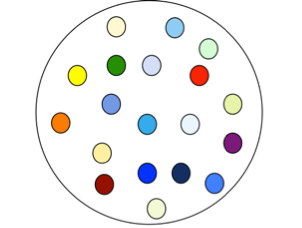
True inclusion: We are all "other"!
The school community is a place where everyone who enters the doors should feel a sense of belonging. Peter Block tells us this means that each child feels represented and welcomed by the behaviours and activities that occur in the classrooms, and that the community “takes its identity from the gifts, generosity, and accountability of its citizens.” But how do we ensure that every child feels welcomed? In our schools we see children from an array of racial backgrounds; we see children with both visible and hidden physical and learning disabilities; we see children representing both wealthy and poverty stricken families. The best leaders are those who can create a world within the walls of the school where every single child is viewed as unique and valuable; where every person working in the school feels that they are contributing to its well-being; that their voice is heard and appreciated.

While there are expectations from the Ministry for addressing ability needs, we have all seen that there is also variety based on the skills and passions of the teachers and administrators. It is here that the educational leader can make a pronounced impact. We can see that there is pushback from teachers in acknowledging the needs of those whose disabilities are less obvious. It is the leader’s job to provide discussion and professional development that will encourage all staff members to listen carefully to the needs of the children; to put the achievement of potential above the desire to make the workload easier.

“Whatever an education is, it should make you a unique individual, not a conformist; it should furnish you with an original spirit with which to tackle the big challenges; it should allow you to find values which will be your roadmap through life; it should make you spiritually rich, a person who loves whatever you are doing, wherever you are, whomever you are with; it should teach you what is important, how to live and how to die.”

John Taylor Gatto

There is nothing in this quote that says that only some parts of the population deserve this kind of education. It is on us, as teachers and educational leaders, to ensure that every member of our very diverse population is able to achieve this vision, to the best of their ability.

Thursday, July 6, 2017

The Silent Language of Cultural Values

One of our discussions in class today was on the topic of cultural hegemony, a rather deep concept which means that any system (such as a society) is embedded with the values and beliefs of the people who designed the system. These values are often hidden beneath the surface - unspoken - though they are the foundation for how people act, interact, conduct business, decide school curriculum, and address “deviant” behaviour. This has meaning when one considers the educational values and social mores of the dominant Western culture in Canada. We are a predominantly individualistic society, focused on learning and acquisition for the betterment of ourselves and our families. This is not the case in many cultures around the world, and was not the case for the Aboriginal communities who first inhabited this land. According to Edward Hall, culture - based on our values - is the silent language we use to communicate with each other. But what if we have different values? How can we understand and learn from each other then?

Our instructor, Carolyn (herself an Aboriginal elder) opened our eyes today to some of the underlying values in Canada’s education system - and how they differ from the values inherent in the Aboriginal culture. She explained about Talking Circles, and how the needs of each person are paramount to the members of the group; the Circle will continue until all members feel healed and complete, no matter the time involved. How different from a culture driven by time: bell schedules, meetings, appointments, all dictating how much time we can spend listening and focusing on another person. It’s hard to have a meaningful Talking Circle in a classroom, knowing that the exploration of personal ideas must halt when the bell goes for the next period. She explained about Restorative Justice, and how the needs of both the victim and the aggressor are considered. The aggressor, given the chance to explain his actions; given the chance to find a way to repair the damage and express true remorse. This is so different from our society’s value on punishment; on ensuring that “justice is done.” Gradually schools are embracing this concept, as more and more we realize that punishment does not provide hope, but the opportunity to atone with sincerity opens the door to growth and possibilities.

As teachers, our responsibility is - as always - to encourage students to look deeply at what we truly value and believe. As learners, we can ask deep questions, seeking the motivation behind the cultural mores we tend to take for granted. This kind of critical analysis is essential not only for children, but for all of us who participate in the unspoken language that is our culture.

Tuesday, July 4, 2017

Lessons from the Medicine Wheel

Today was the start of our first summer course, on Leadership and Counselling Diverse Cultures in Education with Carolyn Kenny. While I know that all manner of diversity will be addressed throughout the course - and in our own research - today’s lesson was predominantly on some of the differences between the traditional Western education system and that of the Aboriginal groups found in BC. Alanaise Goodwill, a professor from Simon Fraser University, visited and explained about the concept of the Medicine Wheel.
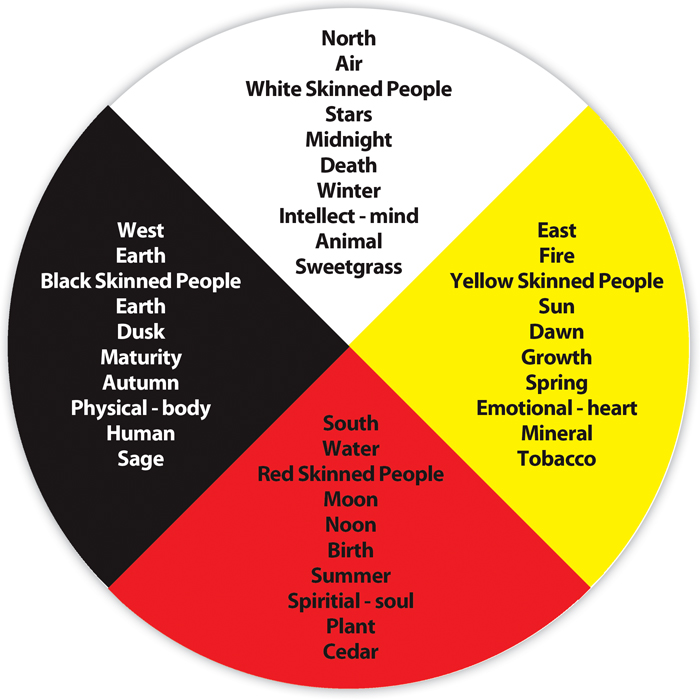
Circle_Diagram_RGB.jpg (700×700)
This is one example of the Medicine Wheel's representations.
This was a new concept to me, although it seemed familiar to many of my classmates; just another example of how diverse is our personal knowledge of diverse cultures! Alanaise explained how the Medicine Wheel was initially a wayfinding system: a circle would be drawn on a field in the prairies, and the people would know to stand in certain places on the circle to navigate during different times of the year. Here in Southern BC finding one’s way via landmarks isn’t all that difficult; but I know from growing up on the prairies that standing in the middle of a field with the vast sky overhead and acres of grass around you can leave you directionless. In modern times, we might just pull out the GPS on our phone to guide us, but as Alanaise explains, the Medicine Wheel was from a time long gone, when the people weren’t confined to reserves but roamed the land freely. Therefore, while its uses as a physical wayfinder have gone, the symbol of the Medicine Wheel has come to represent the sharing of ancient beliefs and traditions to help the next generation find their way through life.

Medicine_Wheel_Bighorn.jpg (500×333)
The Medicine Wheel found in Big Horn, Wyoming.
At the close of the class, Alanaise had us write down our ten most favourite activities (mine included reading, exercising, spending time with my family, gardening…). Then, we were to note for each whether it was spontaneous or planned, had a cost or was free, and was done alone or with others. Finally, we were to determine what sort of activity it was, as outlined on the quadrants of the Medicine Wheel: intellectual, spiritual, emotional, or physical. Looking at our lives, was there balance? Was each part of the Wheel represented? Alanaise emphasized for us how balance in life is crucial, and is a key element in Aboriginal teachings.

I feel fortunate to have been a part of this lesson today. While I am not Aboriginal myself, I too strive for balance in my life, and respect the ancient teachings that promote healing and connectedness among all people. The search for balance and well-being is ongoing, no matter your background or beliefs.