Showing posts with label Instructional Leadership (EEA 532). Show all posts

Saturday, May 6, 2017

Inquiry Leads to Clean Water in Ethiopia

This past March I had the wonderful opportunity of visiting Ethiopia with my family. My husband, Mark, works for a non-profit called Food for the Hungry (FH). If you live in Abbotsford, you may recognize that name as having worked together with Run for Water to raise money for wells in rural Ethiopia (an area called Sasiga). We headed to the Sasiga area to gather film footage, but most importantly, to celebrate the graduation of this community. I had heard through Mark about communities graduating, but until I was there, I didn’t really understand what that meant. As I walked through the village, met the people, and saw the farms and school in action, I began to see the answer. 

Making friends in Sasiga

Ten years ago, the people of Sasiga were stuck in poverty. However, they are strong and motivated so when FH began to partner with them - using local teachers, businesses, and resources - to build skills and awareness, the community began to thrive. This kind of transformation takes time, which is why FH’s model involves a ten-year plan. We know that changing our way of thinking is a daunting task, but that’s exactly what happens in a community like Sasiga. The people began to see that the future - which they had doubted for so long - was in their hands and that they now had the skills to take control of their own lives. 

Meeting Worku, a fellow teacher

Creating opportunities for people to access clean drinking water was a key element to helping this community become healthy. The money raised by Run for Water was instrumental in giving the people the materials and the skills to create and maintain wells throughout the community. My son Nial and I had the opportunity to try out one of the wells, and what a difference! The water from the local stream - previously used for drinking water - was filthy and contaminated. The water we had pouring out at our fingertips was clean!

Run for Water in action!

As we traveled through the village, I saw first hand the proud farmer working his lush fields (he had engineered a watering system from a small nearby creek, which involved hours of labor) - and was fortunate to sample his fresh papaya and bananas...right off the tree! I saw the groups of children running through the fields - healthy and happy, eager to play at any game. Where once students often missed school because of waterborne illnesses or helping at home, I now saw the crowds of school children walking to school, desperate to learn. I also heard them shyly trying out their fledgling English skills with me as we walked through the market (with plenty of giggling on their part, you can be sure!). I saw mothers waiting their turn at the well, knowing their walk back home with clean water would be one of minutes, not hours. 

Wheeeeee!

As I saw all of this, I asked our guide, Samson, when FH knew that a community was ready to graduate. His answer struck home to the teacher in me. He said a community is ready to graduate when they are able to see a problem and figure out a solution. When that happens, they are no longer dependent on outside aid, but are self-sufficient. The community, working together, can now take care of its own. The people in this picture are demonstrating exactly what that looks like. Their small collection of homes was far from the community well that Nial and I tried out. They were inspired, though, by having watched the other wells being created, and so decided to make their own! The people in this picture worked together to create a solution. We were fortunate to arrive just as the men were putting the finishing touches on this homemade well - one that had been dug by hand and went 19 metres down! 

Legesse and Zeneba, thrilled with their clean water!

The ability to examine a problem, search for solutions, and then implement them? An attitude of success - a growth mindset? All of this sounds so much like what we as educators strive to instill in our students. We speak of inquiry as an educational model, with one of its key tenets being applicability to real life. In Sasiga, I witnessed exactly that, in myriad ways, across all ages and genders. Perhaps inquiry is more difficult for us in the Western world as there is less riding on our ability to think for ourselves. We don’t have to be motivated by survival, as we have been bred to believe that there will always be a safety net. If that is the case, then we need to find a different reason to motivate us to seek and question and wonder about the world around us. That is the challenge of education and the reason why Run for Water and Food for the Hungry make such a difference in the world.

Saturday, April 22, 2017

The New Curriculum

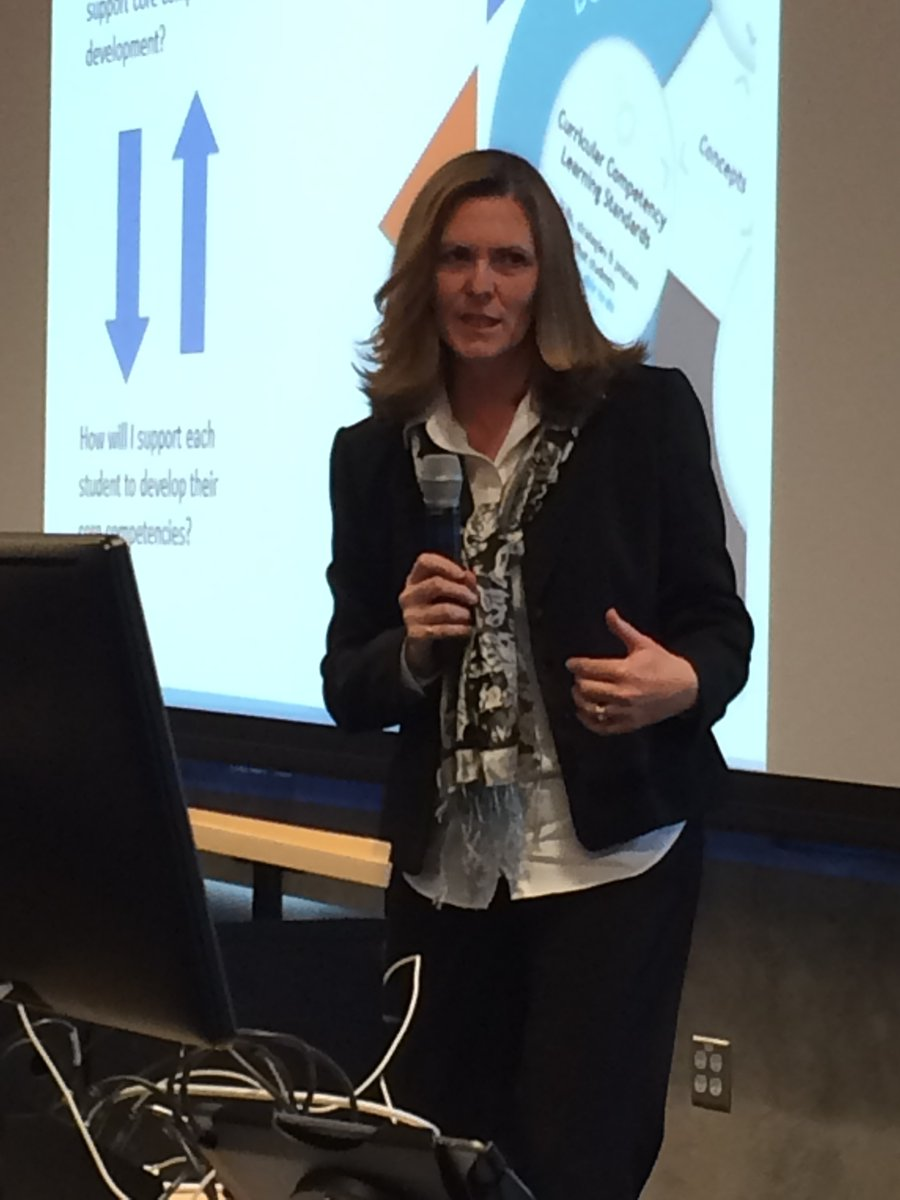
Working through our course on curriculum and instruction, we are immensely fortunate to have Pat Horstead as our instructor. Pat was instrumental in designing the new BC curriculum, and it has been invaluable to hear the “inside scoop” on its development (if you haven’t yet explored it online, head here to check it out). So many times it seems there is a disconnect between what is happening at the Ministry level and the information that trickles down to teachers; the result is an “us vs them” mentality that is inefficient and often, I believe, unnecessary. From Pat’s perspective as a former teacher and administrator, the curriculum development process was collaborative and collegial. All parties were on the same page, and the focus on designing a curriculum to ensure student success in the 21st Century was apparent in all discussions.

This may be one of the few times that all parties in the education system worked cohesively together, and hardly anyone knows it! Surely, this is something to celebrate.


Throughout the course, we have been delving into the curriculum documents to explore all it contains. Again, Pat’s insight is incredibly helpful. Did you know that there are tabs beneath each curriculum page giving suggestions for how to create flexible learning environments, incorporating Aboriginal views into content areas, and addressing the needs of diverse learners? There is also a tab for instructional ideas based on subject area and grade. These tabs were certainly new to me, and I’m grateful for having had the opportunity (you could read that as having been forced as it was an assignment!) to closely examine all the curriculum has to offer.


What does that mean for me as a future educational leader? Along my leadership journey I have been able to explore the document outlining the Leadership Standards for Principals and Vice-Principals in British Columbia (see the pdf here). One of its key tenets is that an educational leader demonstrate Instructional Leadership. In order for that to happen, obviously, the leader must in fact have an excellent grasp of the curriculum - and how to instruct and assess in meaningful ways!

So now I go to roll up my sleeves and prepare to create an inquiry based unit with a clear focus on Big Ideas, Core Competencies, Curricular Competencies, integrating Aboriginal content, and all pulled together by student interest and thematic content. EEK! Good thing I’m a lifelong learner...

Saturday, April 8, 2017

Embracing the 21st Century

Throughout the courses in this Master’s of Educational Leadership has been the theme of inquiry based learning. As I mentioned in a previous post on Investigating Inquiry (February 18, 2017), the fairly recent focus on inquiry based learning and a constructivist approach to teaching is both welcome and intimidating. Our current course is on assessment, curriculum, and instruction - none of which should exist without the other - and I have found myself reading with enthusiasm the “textbook”. Now, I realize that saying those words highlights my nerdy side, but I have to say that for a book on such a potentially dry topic, Interweaving Curriculum and Classroom Assessment by Drake, Reid, and Kolohon (2014) is actually an extremely motivational read. I find myself filled with the tingly, proud feeling that I am a teacher! (albeit one a wee bit overwhelmed by the inspirational teachers outlined in the book…) For any teacher seeking ways to embrace the 21st century in the classroom, this book is a beautiful read. Even though it was written just before the new BC curriculum was unveiled, the concepts and suggestions outlined in the book fit perfectly with the core competencies and curricular competencies we’re wrapping our brains around.


It’s almost as if the new curriculum was based on research!  
Smiley | Free Stock Photo | Illustration of a yellow smiley face ...

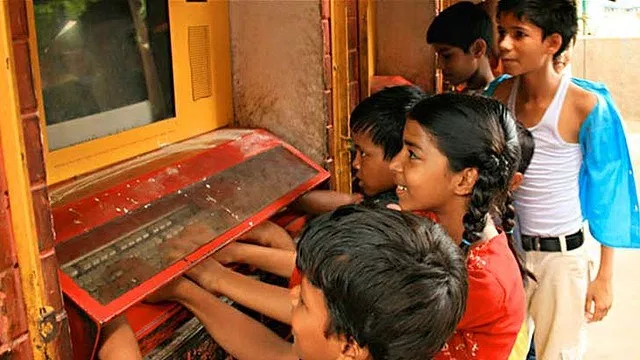
Continuing with this topic of inquiry based learning, this class we watched a TED talk from Sugata Mitra (https://www.ted.com/speakers/sugata_mitra) which is well worth the watch! Mitra has been exploring the (frankly) unbelievable innovation that children will show when they are motivated to learn. Mitra traveled the most remote parts of India, placing a “Hole in the Wall” computer for children to access...and then leaving. When he returned months later, he was inevitably amazed to discover that without a teacher the children had taught themselves English (which they needed to navigate the internet) and were exploring concepts one would have thought to be far out of their reach. There are of course questions that arise to our teacher minds as we watch the video (our class outlined many of them!) but the undeniable truth remains: when children are engaged, there are no boundaries. This seems to me to be the foundation of inquiry based learning. How can we engage students, while helping them to develop the tools to be lifelong learners and agents of change in the world? It’s a huge, multifaceted question - which is why it is a focus for us as budding educational leaders!